🇮🇹 ピエトラサンタのミトライ
イタリア · イーゴル・ミトライの公共彫刻
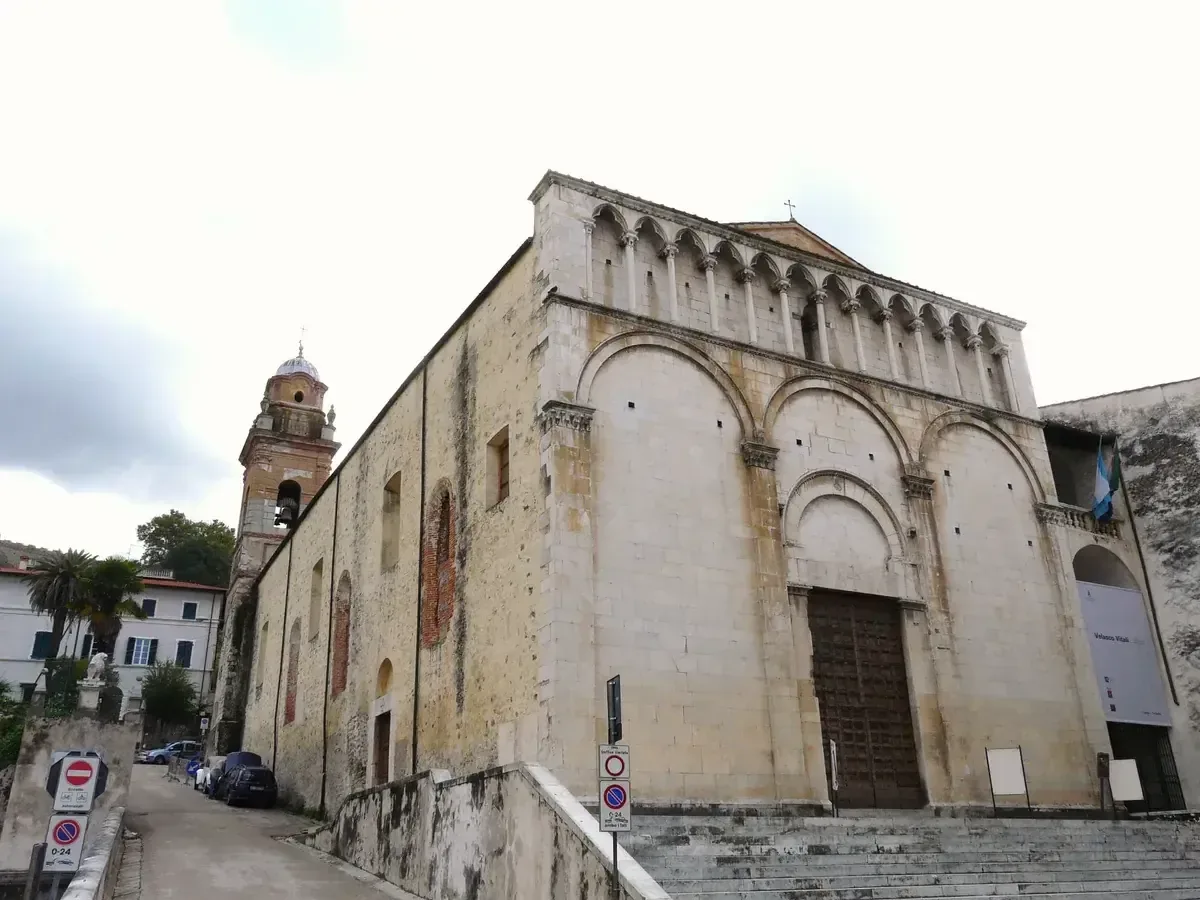
ピエトラサンタはカッラーラ近くの小さなトスカーナの町で、5世紀にわたり彫刻家のアトリエと鋳造所が集まる場所です。1983年にミトライは主要アトリエをここに構え、生涯を過ごしました。2014年に没した彼はサンタゴスティーノ教会に眠り、その正面にはミトライ自身が生前に完成させた大型ブロンズ扉があります。
主要作品と設置場所
- サンタゴスティーノ教会のブロンズ扉 — ピエトラサンタ中心部 · ミトライの建築委嘱 · 生前完成
- アトリエ(1983年〜2014年) — ピエトラサンタ · 永久的な創作の中心地
- 埋葬地 — サンタゴスティーノ教会内

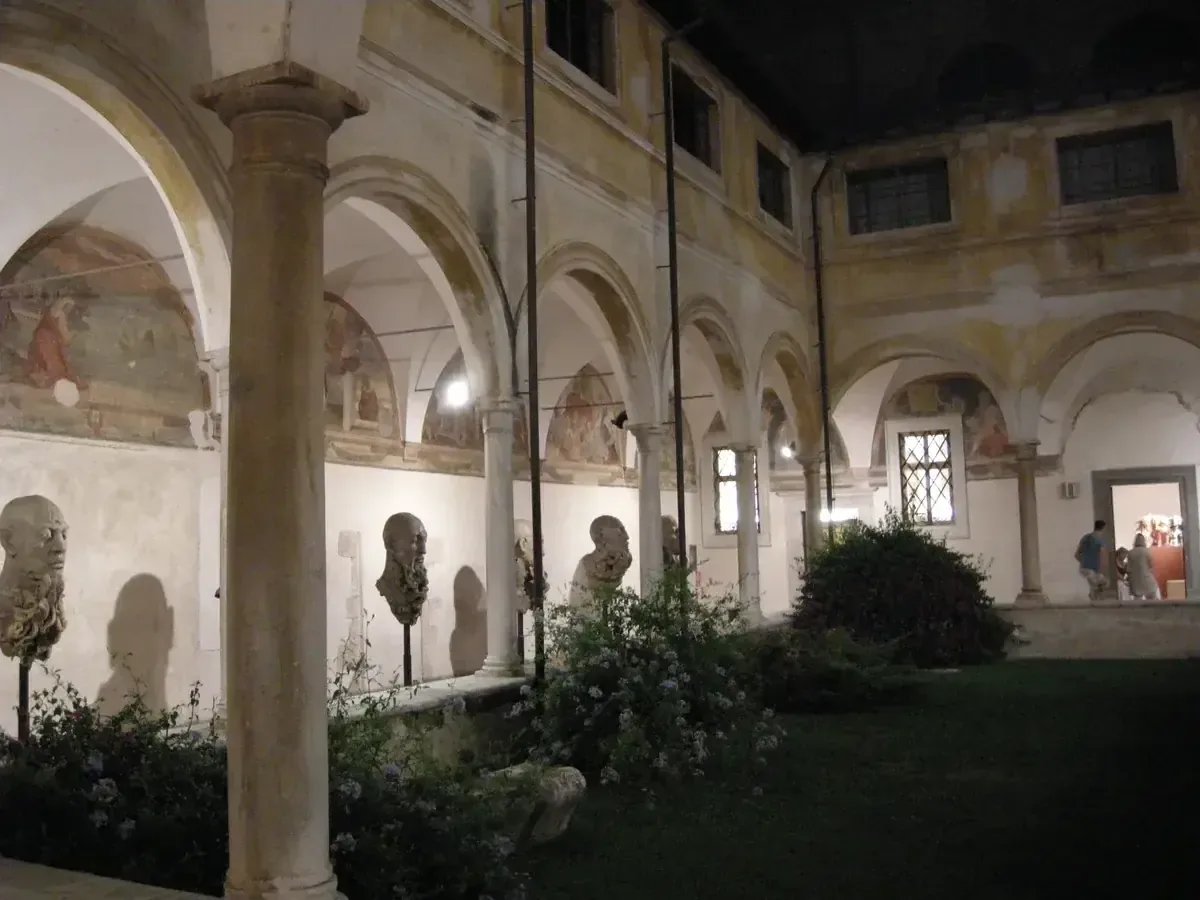
The Fondazione Museo Mitoraj, established within the Sant'Agostino complex after the sculptor's death in 2014, holds a permanent collection of works spanning his full career and serves as the primary institutional reference for provenance research. Collectors seeking authentication or exhibition history for pieces acquired through Italian galleries should contact the foundation directly, as its archive documents studio casts, numbered bronzes, and marble editions produced during the Pietrasanta years.
Pietrasanta's annual summer exhibitions along Via Stagio Stagi and Piazza del Duomo regularly featured Mitoraj's monumental bronzes during the 1990s and 2000s, giving collectors direct access to works before they entered private hands. Pieces such as Tindaro Screpolato and Perseo were displayed in outdoor contexts that closely mirror their eventual permanent installations, making provenance documentation from these exhibition periods particularly valuable when establishing condition baselines for insurance and resale purposes.
Pietrasanta's marble workshops, particularly those on Via Valdicastello, executed many of Mitoraj's carved editions under his direct supervision, and bronzes cast at the Fonderia Mariani during the 1990s carry foundry marks that experienced buyers use to distinguish authorised lifetime casts from posthumous editions. Works including Eros Alato and Centurione exist in multiple scales, and matching a piece's dimensions against documented studio records remains the most reliable method for confirming its place within a numbered series.
Mitoraj's relationship with Pietrasanta extended beyond his own studio: he collaborated closely with marble carver Sem Ghelardini, whose workshop executed several large-scale marble heads during the late 1980s and early 1990s. Collectors acquiring works from this period should note that pieces bearing both Mitoraj's signature and Ghelardini's workshop stamp represent direct collaborations rather than purely studio productions, a distinction that occasionally affects valuation at specialist auction.
Mitoraj's relationship with Pietrasanta extended beyond his own studio practice: he collaborated closely with marble carver Sem Ghelardini, whose workshop produced several of the artist's large-scale marble heads during the 1980s and early 1990s. Collectors acquiring works from this period should note that pieces bearing both Mitoraj's signature and Ghelardini's workshop stamp represent direct studio collaborations rather than purely workshop editions, a distinction that carries meaningful weight in auction valuations and insurance appraisals.
Mitoraj's Pietrasanta period produced a distinct body of terracotta studies, rarely offered at auction, that served as preparatory models for larger bronze and marble commissions; several have appeared through Pandolfini Casa d'Aste in Florence, typically consigned by estates of Italian collectors who acquired them directly from the studio during the 1990s. These works, often unsigned but accompanied by studio photographs confirming authorship, occupy an underexamined segment of the market and generally realise considerably less than comparable bronzes, representing a potential entry point for collectors building a focused collection around his classical figure fragments.
Mitoraj's relationship with Pietrasanta extended beyond his own studio practice: he collaborated closely with local marble carver Sem Ghelardini, whose workshop on Via Barsanti executed several large-scale marble works during the late 1980s and early 1990s. Collectors acquiring marble pieces from this period should verify whether a work bears both Mitoraj's signature and a workshop stamp, as documented examples of Testa di Medusa and Ikaro from these years carry both marks. The distinction matters commercially, since carved marbles produced under Mitoraj's direct supervision in Pietrasanta command a significant premium over later licensed editions executed without his presence.
Mitoraj's relationship with Pietrasanta extended beyond his own studio practice through sustained collaboration with local marble carvers, most notably the workshop of Sem Ghelardini, whose craftsmen translated his plaster maquettes into finished marble editions throughout the late 1980s and 1990s. Collectors acquiring marble works from this period should note that Mitoraj typically approved final surfaces in person, and pieces bearing his signature alongside a workshop inventory number can often be cross-referenced against surviving order books still held privately in Pietrasanta. The distinction between works carved under his direct supervision and those produced posthumously from existing models carries significant market consequences; auction results at Sotheby's Milan between 2016 and 2022 show supervised lifetime marbles consistently achieving premiums of thirty to fifty percent over comparable posthumous carvings, making thorough provenance documentation essential before acquisition.
Mitoraj's relationship with Pietrasanta extended beyond his personal studio practice to a sustained collaboration with local stonecutters trained in the Apuan tradition, several of whom worked exclusively on his commissions for over a decade. Among these, the Sem Ghelardini workshop produced marble versions of Testa di Medusa and Luna during the late 1990s that bear discreet chisel marks distinct from those found on editions carved in Carrara. Collectors acquiring marble works from this period should request the corresponding bozzetto, typically a small plaster or resin study retained by the studio, which the Fondazione Museo Mitoraj uses as a primary comparator during attribution reviews. The foundation's archive also holds photographic records from Mitoraj's annual open-studio events, held each September between 1995 and 2012, which documented works in progress alongside completed pieces and provide datable visual evidence particularly useful when establishing provenance for sculptures that passed through the Italian secondary market before 2014.
Mitoraj's relationship with Pietrasanta extended beyond his personal studio practice to encompass a network of specialist craftsmen whose technical knowledge directly affects how collectors assess works today. The marble carvers at Henraux, the historic quarrying and fabrication firm based nearby in Querceta, collaborated with Mitoraj on large-scale marble commissions throughout the 1990s and into the 2000s, and invoices or correspondence referencing Henraux can materially strengthen provenance documentation for marble pieces from that period. Bronze editions cast at the Fonderia Mariani typically bear a stamped foundry mark accompanied by the cast number and year, formatted as a fraction indicating the edition size, for example 2/8 with the year beneath; collectors should verify that this mark appears on the interior surface of hollow casts rather than on an added plate, which can signal a later or unauthorised reproduction. Works such as Argo and Testa di Centauro exist in both Pietrasanta marble and bronze variants, and distinguishing the medium in early exhibition records from local Versilia gallery catalogues remains one of the more reliable methods of confirming which edition a given piece belongs to.
ミトライ作品をお持ちですか?
ワルシャワのプライベートコレクターが直接購入します。オークション手数料なし。迅速・秘密厳守。
Any other Mitoraj work also welcome — any subject, condition, or format.
ミトライの作品を売却しませんか? 売却ページをご覧ください →
