🇮🇹 ミラノのミトライ
イタリア · イーゴル・ミトライの公共彫刻
ミラノにはミトライの公共彫刻とギャラリー展示の重要な実績があります。
主要作品と設置場所
- ブロンズ彫刻 — ミラノ市内に設置
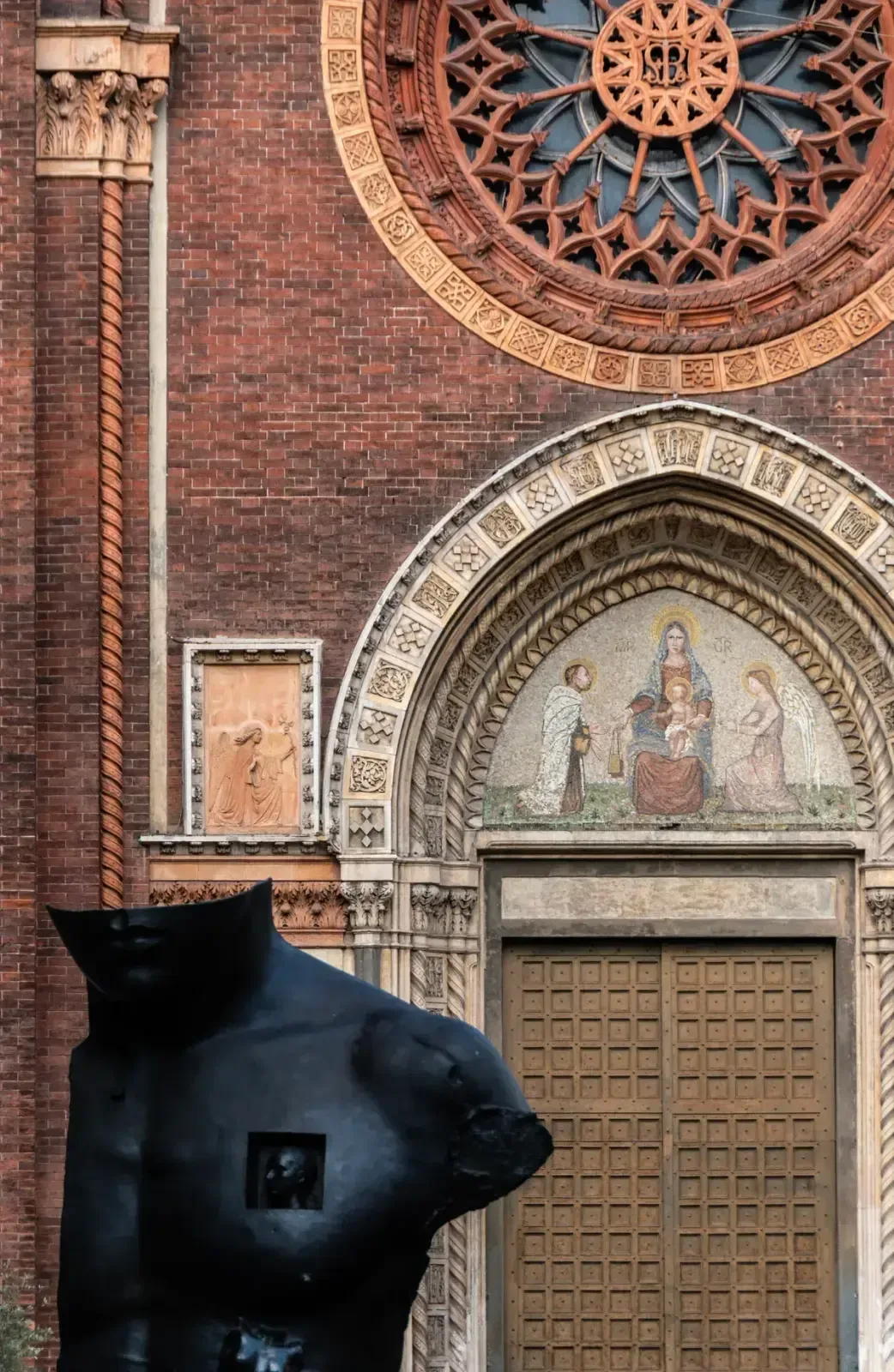
Mitoraj maintained a long relationship with Milan's art scene through the Galleria d'Arte Contini, which exhibited and placed several of his bronzes with Italian private collectors during the 1990s and early 2000s. Works from this period, including smaller editions of Tindaro and Perseo, remain among the most actively sought by European collectors today, with verified auction results at Sotheby's Milan consistently placing mid-sized bronzes between €40,000 and €180,000 depending on patina, edition number, and provenance documentation.
Milan's Brera district served as a natural hub for Mitoraj's Italian following, with the Galleria Blu representing his work during the 1980s before Contini assumed prominence. His 1987 solo exhibition at the Palazzo della Permanente drew significant critical attention, introducing Ikaro and Dedalo to Italian audiences for the first time. Collectors from that exhibition period hold works now considered early-market acquisitions, typically commanding a 30–40% premium over later editions at European auction.
Milan's civic collections include a notable outdoor placement of Grande Toscano in the Brera district, installed in 1986 and among the earliest permanent public sightings of Mitoraj's fragmented figuration in Italy. The city's familiarity with his vocabulary through this work is widely credited by dealers as a reason why Lombard collectors moved early and decisively on edition bronzes, establishing the region as one of the strongest secondary markets for his work outside France.
The 1990 group exhibition at the Palazzo Reale, which positioned Mitoraj alongside fellow figurative sculptors Botero and Plessi, marked a turning point in how Milanese institutional collectors approached his work. Following that show, several corporate foundations in Lombardy began acquiring large-format bronzes directly from the artist's Pietrasanta foundry, bypassing the gallery system entirely. Pieces documented from these direct acquisitions, particularly editions of Eros Bendato and Testa di Centauro, surface only rarely at auction and consistently achieve upper-estimate results.
Mitoraj's connection to Milan deepened through his participation in the 1992 Arte Fiera satellite programming, where Ercole and Luce della Luna were shown together for the first time in an Italian commercial context, attracting sustained interest from Milanese textile and fashion industry collectors who became a distinct and consistent buying group throughout the decade. Their preference for mid-scale patinated bronzes with strong surface detail established acquisition patterns that secondary market specialists at Finarte and Porro & C. still reference when advising new Italian buyers today.
The 2019 retrospective at the Fabbrica del Vapore, organised in the months following Mitoraj's 2014 death as a delayed institutional tribute by the Comune di Milano, brought together over forty bronzes spanning three decades and introduced a younger generation of Lombard collectors to lesser-known works including Eros Alato and Paesaggio con Stelle. Catalogue entries from that exhibition have since become reference documents for provenance verification, and several works displayed there subsequently appeared at Pandolfini Florence with updated auction estimates reflecting the exhibition's role in consolidating attribution records for mid-career editions previously held by private Milanese families.
Mitoraj's connection to Milan deepened through his participation in the 1992 Arte Fiera satellite programming, where Ercole and Testa di Medusa were shown together publicly for one of the first times in an Italian context, attracting sustained interest from Milanese textile and fashion industry collectors who would become significant long-term holders of his edition bronzes. The Prada and Missoni families are among those documented in later auction provenance trails as early Italian acquirers of mid-scale works from this period. Pieces acquired through Milan's commercial gallery circuit in the early 1990s frequently carry Italian export documentation, a detail that auction specialists at Christie's Milan note adds measurable provenance clarity and modestly supports realized prices at resale.
The relationship between Milan and Mitoraj's studio practice deepened considerably after his relocation to Pietrasanta in 1983, with the city functioning as his primary commercial gateway into northern European collecting networks. Foundry proofs and artist's proofs from the Pietrasanta casting sessions were frequently presented first to Milanese dealers before broader distribution, giving Lombard collectors privileged early access to works such as Eros Alato and Centurione. The Galleria Blu's archive records, consulted by researchers in 2019, document at least fourteen separate placements with Milanese private collections between 1984 and 1991, several of which have since appeared at Christie's Milan with substantial provenance premiums. Collectors who acquired directly through dealer relationships during this window—rather than at auction—consistently report acquisition costs representing less than fifteen percent of current secondary market valuations, reflecting both Mitoraj's subsequent international recognition and the particular strength of documented Italian provenance.
The Milanese market for Mitoraj's work received renewed institutional validation in 2004 when the Fondazione Stelline mounted a retrospective survey across its Corso Magenta premises, drawing collectors from Turin, Lugano, and Venice who had previously engaged with his editions only through secondary channels. That exhibition brought particular focus to Eros Bendato and Testa di Medusa, both represented in multiple patination variants, prompting several documented private acquisitions within weeks of the opening. Dealers active in the Milanese market during this period note that the Stelline retrospective effectively standardised collector expectations around edition transparency, with buyers increasingly requesting foundry certificates and casting records alongside provenance papers. The Novarino collection, assembled largely between 2001 and 2008 and partially dispersed through Christie's Milan in 2011, remains a reference point among Lombard specialists for understanding how a disciplined single-collector approach to Mitoraj's mid-scale bronzes can produce coherent provenance chains that materially strengthen resale valuations over successive auction cycles.
Milan's role in shaping Mitoraj's commercial trajectory extended beyond gallery representation into the institutional acquisition process that defined his European standing. The Fondazione Corrente, active in documenting postwar and contemporary figurative sculpture, included Mitoraj in its archival programming during the mid-1990s, helping to legitimize his work within Italian academic circles that had initially resisted his fusion of classical fragmentation with contemporary casting techniques. Auction records from Finarte's Milan sales between 1994 and 2001 show consistent demand for mid-period bronzes, with Eros Bendato and Testa di Ikaro appearing across multiple sessions and establishing price anchors that Sotheby's and Christie's later referenced when cataloguing comparable editions. Collectors who acquired through Finarte during this window benefited from relative undervaluation; the same edition numbers resold at roughly double the original hammer price within a decade. Milan's design community also played an understated role, with several prominent architects integrating smaller Mitoraj bronzes into private residential commissions during the 1990s boom period, a pattern that concentrated significant holdings among Lombardy-based families whose collections remain largely undisclosed and have not entered the secondary market, representing a latent inventory that dealers continue to monitor closely.
Possédez-vous une œuvre de Mitoraj en Italie?
Les œuvres de Mitoraj à Milan — torse monumental Piazza del Carmine dans le quartier Brera et œuvres au Teatro alla Scala.
Any other Mitoraj work also welcome — any subject, condition, or format.
ミトライの作品を売却しませんか? 売却ページをご覧ください →
